Creating the Context
Home
Research Focus
Background Info
Research Methods
Data Submission
Results of Study
Data Analysis
Conclusion
Further Research
Guided Research
Research Question
Background Info
Research Methods
Data Submission
Results of Study
Data Analysis
Conclusion
Further Research
Research Values
Student Research
Doing Research
Publish
View
Tools
Discussions
Stream Teams
Water Links
|
|
Biological Monitoring
Biological monitoring can inexpensively screen for problems that are
not specifically tested for using common chemical kits. The presence of
heavy metals, pesticides, herbicides, and other toxins in a stream may
be indicated by a lack of biodiversity in a stream. Since certain organisms
can tolerate more pollution than others, the greater the variety of organisms
- the better the water quality. Biological monitoring can also indicate the
presence of problems that extend over time.
The organisms that live in a stream are affected by the quality of the
water in the stream. Some aquatic organisms, such as fish and frogs, can leave
a polluted stretch of a stream; other organisms cannot. The organisms that cannot
leave can be viewed as indicator organisms. Some pollutants are only in the water
for a short period of time before they dilute out or wash downstream. These short
term events might not show up in testing but they can have a dramatic impact on the
organisms living in the stream. The presence of indicator organisms tells
us a history of water quality in the stream.
Benthic macro-invertebrates are good
indicator organisms and can be used to determine the health of a stream. Benthic means
bottom dwelling, macro means large enough to be seen, and invertebrate means an animal
without a backbone. Most benthic macro-invertebrates are aquatic insects or the aquatic
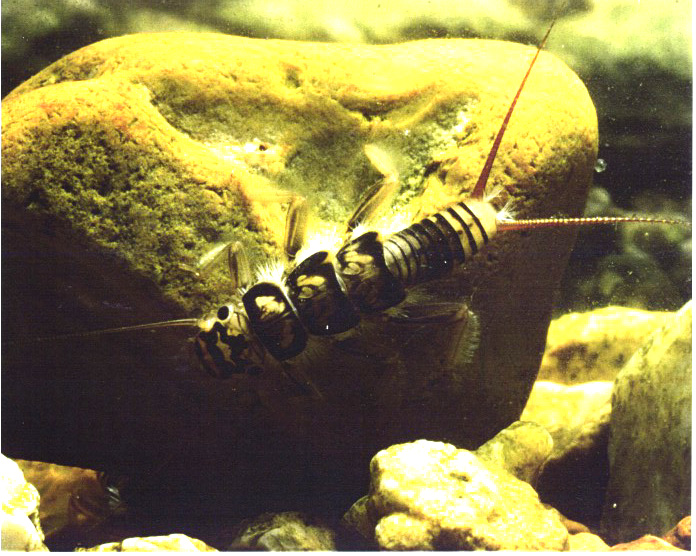
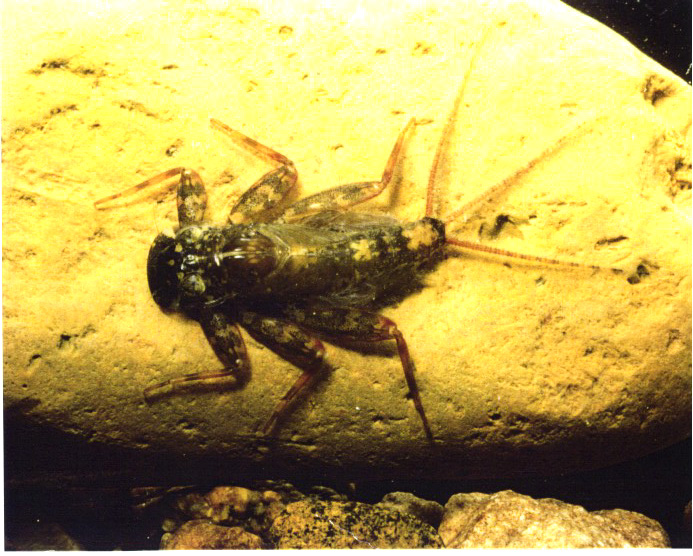
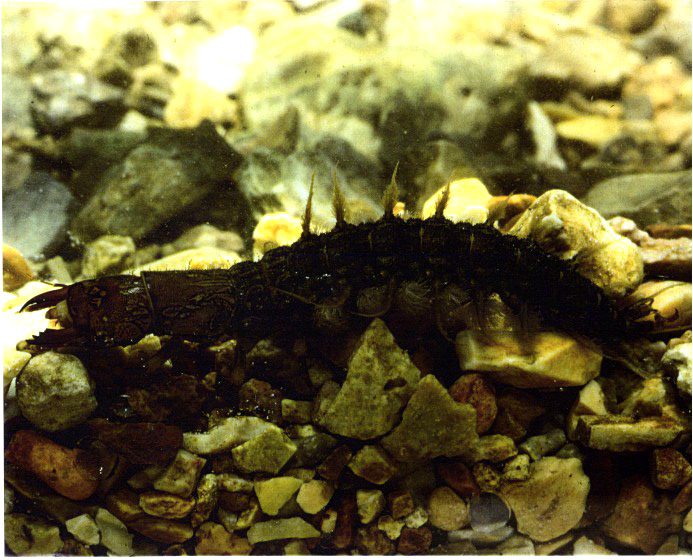
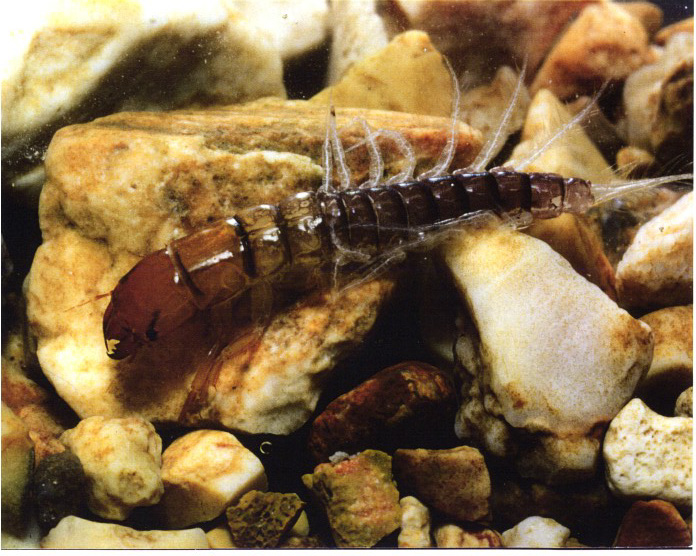
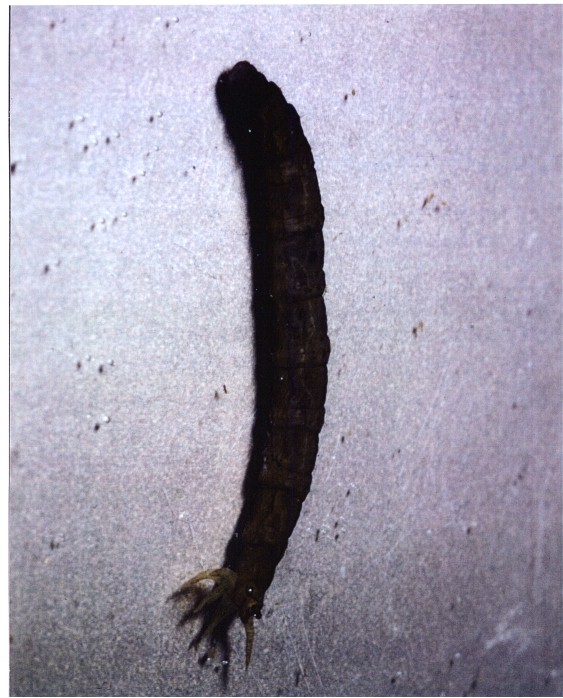
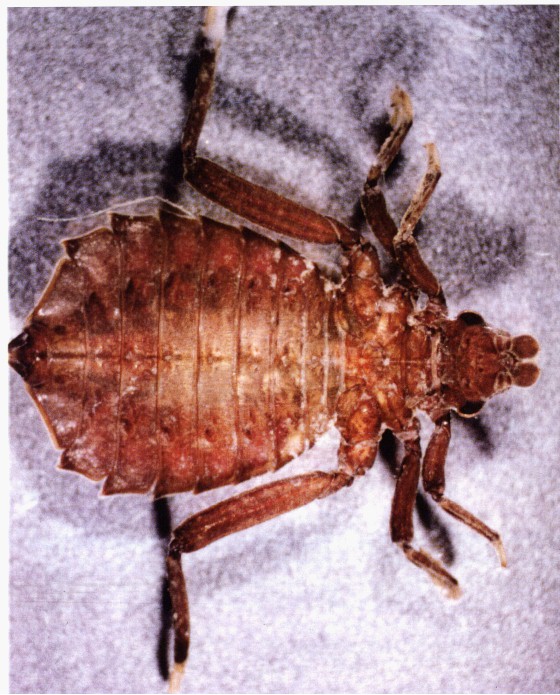
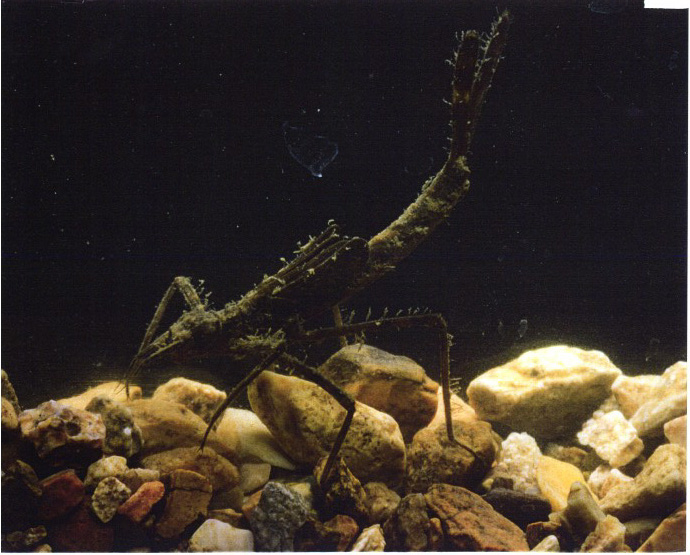
stages of insects. Examples include stonefly nymphs, mayfly nymphs,
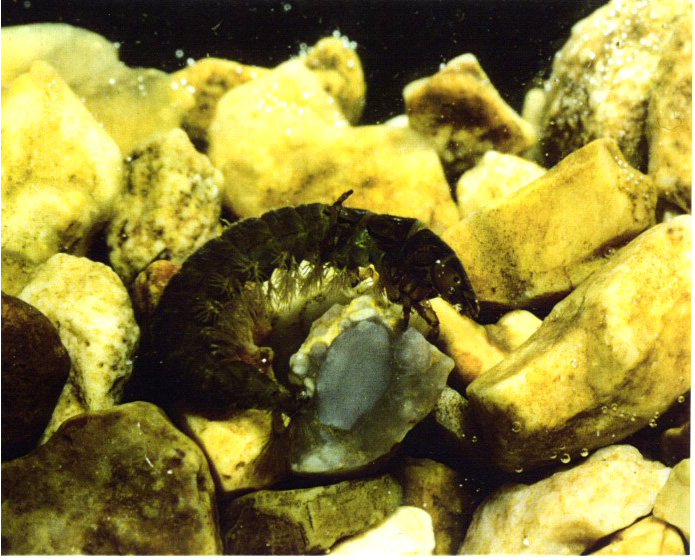
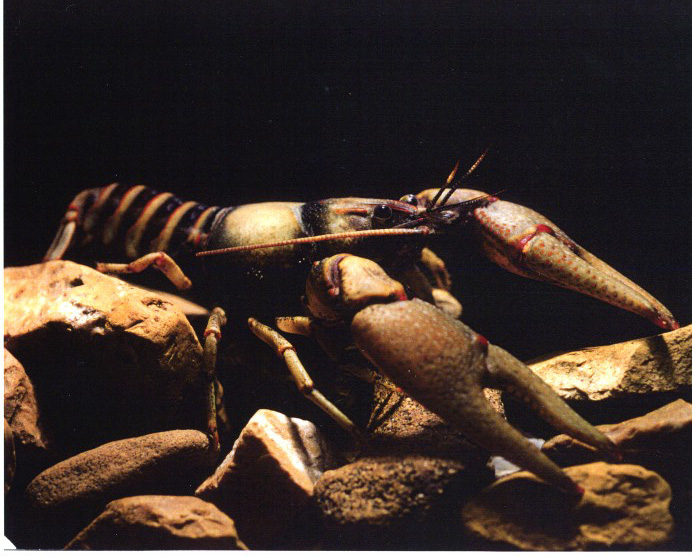
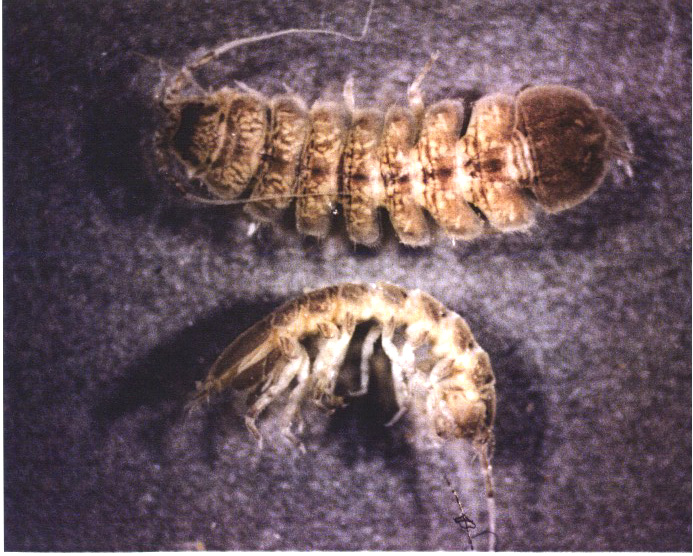
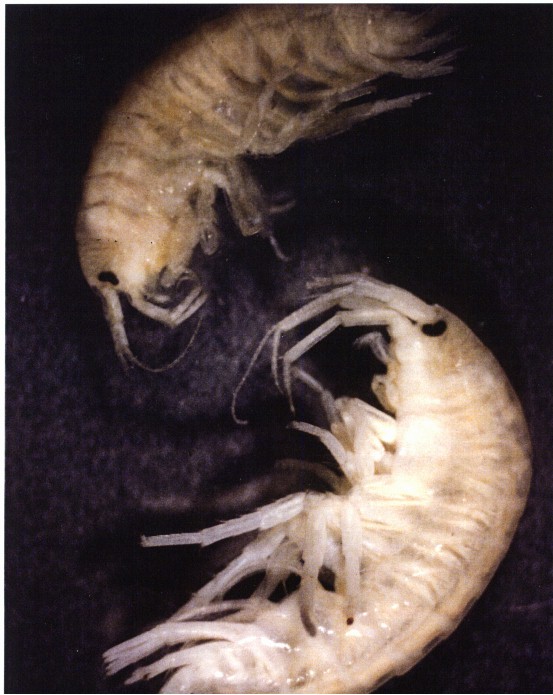
caddisfly larvae, dragonfly nymphs, and midge larvae. Also benthic macro-invertebrates
include such things as mollusks, crustaceans and worms.
Benthic macro-invertebrates are good indicator organisms because:
- they are sensitive to physical and chemical changes in their habitat.
- they cannot easily escape pollution in their environment, and
- they are easily collected and classified.
Biological Monitoring Research Methodology
At your sampling site, measure a 200’ segment
that contains the riffle habitat, from which the sample will be collected.
- Conduct physical survey for this 200’ segment.
- Date:_____________________ Collector:___________________________
- Stream Name:________________________(city and/or county):___________________
- Landmarks and Description of Sampling Site:
- The sampling site is in (habitat type i.e. woods, meadow, yard, etc.):
- Weather Conditions This Date:
- Temperature of the Stream (Degrees Celsius or Fahrenheit):
- Width of Stream at Sampling Site (meter.centimeter):
- Depth of Stream Center at Sampling Site (meters.centimeter):
- Stream Flow: Swift    Moderate    Slow
- Are there fish in the stream? Yes    No
- Are there plants in the water? Yes    No
- Plants on stream bank: Trees   Grasses   Flowers    Shrubs     None
- The water is: Clear    Muddy    Cloudy     Oily
- Additional Observations:
- Wade to the first general collection area, choose the first specific collection
spot to place the net, and get into position.
- Have 1 person place and hold the net, facing upstream, on the river bottom at
the collection spot.
- Have another person dislodge the organisms from a rectangular area of the
stream bottom as wide as the net and 1 foot back from the opening so that the
organisms are carried into the net. Pick up and rub and/or brush off the rocks
and dig into the river bottom. First, pick up the larger rocks in the rectangle upstream of the net and,
holding them inside the net, vigorously rub them all over with your hands to
dislodge organisms clinging to the surface. If you have a sieve bucket, place
rocks in the bucket to rub them more thoroughly with a brush. If you don’t
have a sieve bucket, be thorough with your hand rubbing. Place rocks aside
when finished rubbing. When you’ve rubbed off all the rocks and placed them aside or in a sieve
bucket, use your feet or a hand trowel to dig down as far as possible into the
river bottom in the same rectangular area to dislodge burrowing organisms.
If you find any more rocks, treat them as in the step above.
- Place the first sample in a large white tub with a few inches of water
(enough to cover all the items in your sample). If you have a large amount of
debris, you might shake each piece thoroughly under the water to dislodge the
organisms, and then remove the debris from the tray.
- Collect an assortment of the organisms you find and sort them in white ice cube
trays or petri dishes.
- Once you have have picked the entire sample, review
the sorting that you have done and organize the categories more accurately.
- Identify and sort organisms in your sample to the order / major group level.
The Stream Study provides a method to determine the water quality of a stream based on the
collection and identification of stream-bottom macroinvertebrates. The Stream study also provides
a useful
IDENTIFICATION KEY
for common stream-bottom macroinvertebrates. Another Identification key can be found at this
New York State site.
Identify the Macroinvertebrates found at the
stream sampling site using the form below, and put the number of each type
in the box beside the name of each type you find. Count how
many you have of each type and record the total on the appropriate line.
- Try using the "Bug Card" to confirm identification and placement.
For taxa not pictured, make up your own description (e.g. furry-gilled,
mottled color, etc.) and write it in the “other” box for the appropriate order.
- Repeat steps to analyze the second (replicate) sample.
- Record your counts on the Data Reporting Sheet below.
Assessing the Stream's Health
- Enter the presence (check mark) of each type of macroinvertebrates you found in your sample in the appropriate blanks below below.
- Enter how many different sensitivity types (not the number of each type)
of macroinvertebrates you checked in each sensitivity group below.
- Multiply by the number in the table to get a group score.
- Add the three group scores.
- Look at the total score and circle the correct rating.
| Sensitivity Groups | Number
of
Types | Scoring Value |   | Group Score |
| Very Sensitive |   |
3 | = |   |
| SomewSomewhatitive |   | 2 | = |   |
| Not Sensitive |   | 1 | = |   |
|   |   |
Total Score | = |   |
| Excellent | Good |
Fair | Poor |
| (23 or more) | (17 - 22) |
(11 - 16) | (10 or less)
|
|